
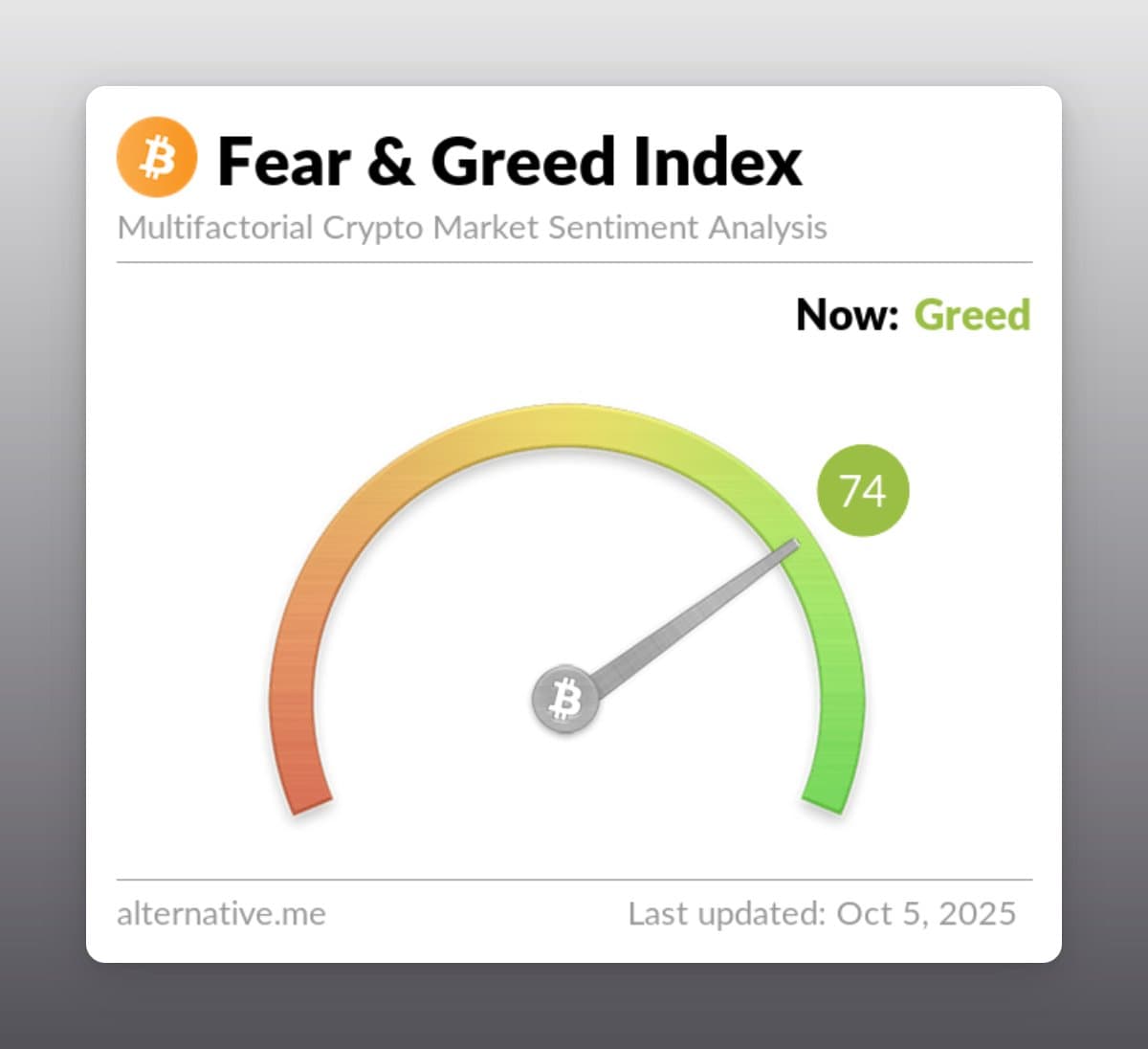
Fear and Greed Index in Crypto: What It Is, How It Works, and How to Use It to Improve Your Strategy
The Crypto Fear and Greed Index has become one of the most widely followed sentiment indicators in the crypto market. Many traders look at it every day, but very few truly understand how it works or how to apply it correctly.
In this guide, you'll learn what the index measures, how it’s calculated, what each range means, and how to use it to make smarter decisions while avoiding common mistakes.
What Is the Crypto Fear and Greed Index?
The Fear and Greed Index measures overall market sentiment on a scale from 0 to 100:
- 0 = Extreme Fear
- 100 = Extreme Greed
The idea behind it is simple.
When most people are fearful, opportunities often appear. When most people are greedy, the market tends to get riskier.
How Is the Index Calculated?
The index is updated daily and combines different market-related factors. Each one contributes to the final score and helps build a picture of how traders feel.
1. Volatility (25%)
Sharp price movements tend to signal fear.
Example: In May 2021, Bitcoin dropped from 64,000 to 30,000 in a matter of weeks, and the index fell to 7.
2. Market Momentum & Volume (25%)
- Strong upward moves with high volume reflect greed
- Declines on low volume reflect fear or indecision
Momentum helps show whether buyers or sellers are dominating.
3. Social Media Activity (15%)
The index monitors keywords, discussions, and engagement across platforms like X.
More hype, noise, and euphoria typically push the index higher.
4. Bitcoin Dominance (10%)
When BTC dominance rises, the market tends to be moving away from riskier assets (altcoins) toward Bitcoin.
This often reflects fear.
5. Search Trend Data (10%)
Google search trends are analyzed:
- “Buy Bitcoin” → often signals greed
- “Bitcoin crash” → signals fear
Different providers may vary slightly in weightings, but the concept remains the same.
How to Interpret the Fear and Greed Index
Extreme Fear (< 25)
This often appears after heavy market corrections, liquidations, or panic-driven selling.
Historically, these conditions have been strong accumulation opportunities for long-term investors.
Real example:
After the FTX collapse in late 2022, the index dropped to 10.
In the following months, Bitcoin climbed more than 300% from the bottom.
Extreme Greed (> 75)
This reflects euphoria, FOMO, and overconfidence.
Prices usually climb rapidly during these periods, but risk also increases.
In extreme greed, many investors consider:
- Taking profits
- Reducing risk
- Rebalancing positions
Limitations You Should Know
The Fear and Greed Index is useful, but it comes with limitations:
- It does not predict the future
- It is a lagging indicator
- It focuses mostly on Bitcoin, not the entire market
- It can be influenced by hype cycles on social media
For this reason, it works best when combined with:
- RSI or other technical indicators
- On-chain metrics
- Market structure and liquidity
- A clear personal trading or investing plan
How to Use the Fear and Greed Index in Your Strategy
Some practical ways to integrate it into your decisions:
- Treat it as a market sentiment thermometer
- Identify whether you are being influenced by fear or greed
- Strengthen dollar-cost averaging or planned buys during extreme fear
- Be more conservative or take profits during periods of extreme greed
- Use it as a secondary indicator, not your main signal
Conclusion
The Crypto Fear and Greed Index is not just a number. It’s a mirror of collective market emotions and a valuable tool for understanding what phase the market is in.
Next time you see it flashing “Extreme Fear,” ask yourself:
Are you reacting emotionally… or taking advantage of the opportunity?
About ConcoDeFi
At ConcoDeFi, I share practical guides, real opportunities, and clear educational content to help you navigate the crypto and DeFi ecosystem with confidence.
Explore more resources on the website or follow for new insights and updates.
Related Links
Support This Article
Help us create more quality content like this